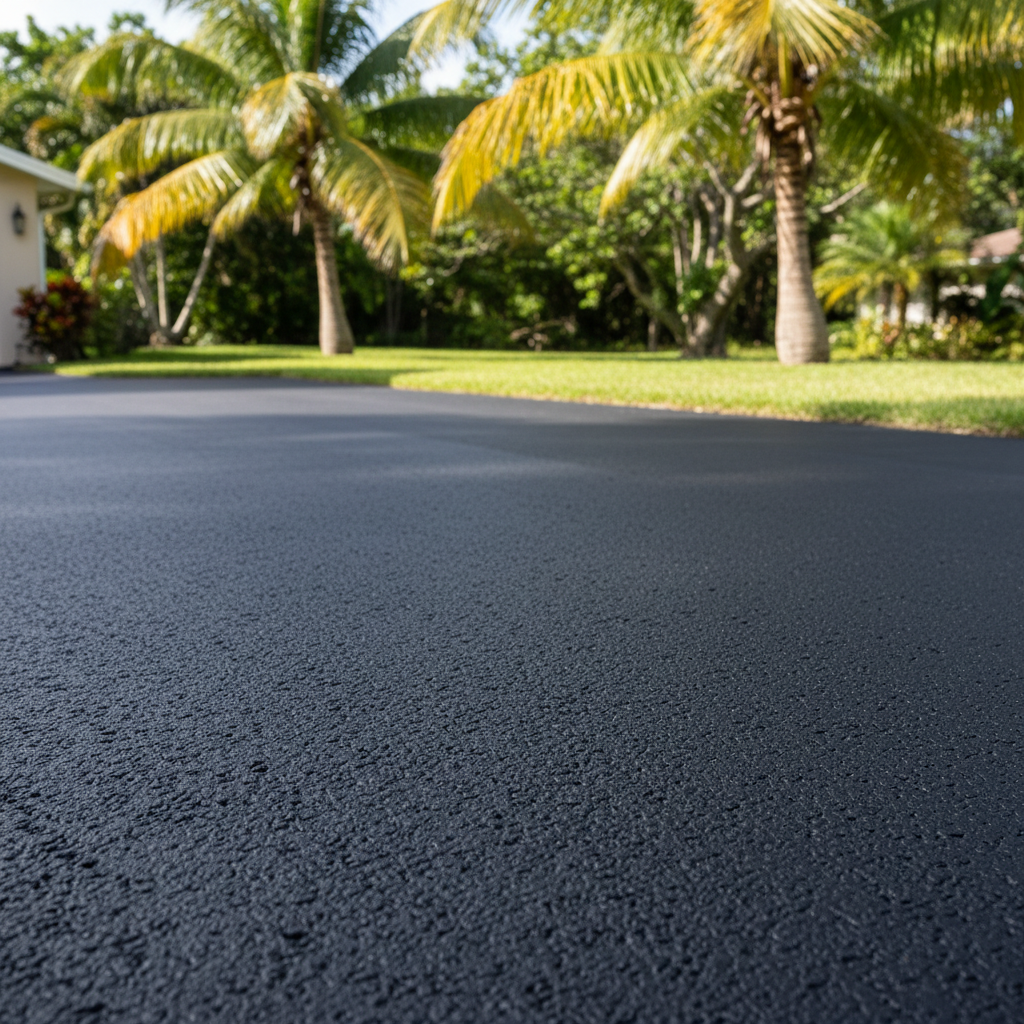
What's the best material for a driveway in Sunrise, FL?
Honestly, this is probably the question I hear most often. For most homeowners right here in Sunrise, asphalt usually turns out to be the smartest choice. Why, you ask? Well, for one, it's pretty cost-effective. You'll definitely get more bang for your buck compared to concrete, especially if you're talking about a bigger driveway. Plus, it's more flexible, and that's a huge deal in our climate. We've got a lot of shifting soils around here, and the constant heat and heavy rains can make concrete crack pretty easily. Asphalt, though, can flex with those changes, meaning fewer cracks and a longer life if it's put in right and taken care of. And hey, repairs on asphalt are generally simpler and cheaper than concrete. You can patch asphalt so it blends in nicely, but a concrete patch often sticks out like a sore thumb, doesn't it? Don't get me wrong, concrete has its place – great for smaller, decorative spots – but for a functional driveway that needs to hold up to Florida weather, I typically point people toward asphalt.
How long does a new asphalt driveway last around here?
A well-installed asphalt driveway in Sunrise, if you keep up with its maintenance, should easily last you a good 15 to 20 years. Sometimes even longer! The key phrases there are 'well-installed' and 'proper maintenance.' If a contractor skimps on the base prep, or uses cheap materials, you're going to start seeing problems a lot sooner. That's why I always emphasize getting a good, solid base. Here in South Florida, especially in parts of Sunrise that are older or might have reclaimed land or a higher water table, you really need to make sure that base is stable and drains properly. Without it, you'll end up with potholes and cracking, no matter how good the asphalt layer itself is. And 'proper maintenance' just means sealing it every few years. That sealcoat protects the asphalt from the sun's harsh UV rays and water getting in, which are its biggest enemies down here.
Can I pave over my existing concrete driveway with asphalt?
You can, sure, but it's not always the best idea without really thinking it through. We call it an asphalt overlay. The main perk is that it's usually cheaper than ripping out all the old concrete. However, there are some big "ifs" involved. First, the existing concrete has to be in pretty decent shape. If it's got a lot of severe cracks, or it's heaving up, or has major structural issues, those problems will likely show through the new asphalt layer over time. We call that 'reflection cracking.' You'd need to fix those concrete cracks first, and sometimes even add a special fabric layer to help keep them from coming through. Also, paving over concrete will raise your driveway's height. You need to be sure that won't cause drainage problems or get in the way of your garage door. We always check those things thoroughly before we'd ever recommend an overlay.
What's the typical timeline for a new driveway installation?
From start to finish, putting in a new asphalt driveway usually takes a few days, but it's spread out over a bit longer than that. The actual paving part is often just a day or two. Day one might be all about digging out the old stuff and getting the base ready. We're talking excavation, grading, and compacting the new base material. Then, depending on the weather and how much base work is needed, we might let that settle for a day or two. The actual paving day involves laying down the hot asphalt and compacting it. After that, you need to let it cure. We usually tell homeowners to stay off it for at least 24-48 hours, but it's best to keep heavy vehicles off for about a week. So, while the active work might be quick, plan for a week or so from start to full usability. And weather, especially our afternoon thunderstorms, can definitely impact the schedule too.
Do I need a permit to pave my driveway in Sunrise?
That's a good question, and the answer is: it really depends on the job's size. For a simple 'like-for-like' replacement of an existing driveway that isn't changing its size or footprint, you often won't need a full building permit from the City of Sunrise. However, if you're making the driveway bigger, moving it, or significantly changing the drainage on your property, then yes, you absolutely will need a permit. The city just wants to make sure any changes don't negatively affect stormwater runoff for you or your neighbors. It's always best to check with the city's building department, or have your contractor do it, before you start any work. As All Star Asphalt Co., we handle all the necessary checks and permitting for our clients, so you don't have to worry about it.
How do I choose the right contractor for my driveway project?
Choosing the right contractor is probably the most crucial decision you'll make for your driveway. Don't just go with the cheapest bid; that's a recipe for disaster in this business, trust me. First, make sure they're licensed and insured. Ask to see proof! You definitely don't want some fly-by-night operation working on your property. Second, look for local experience. A contractor who understands the specific challenges of paving in South Florida – the heat, the rain, the soil conditions – is truly invaluable. Ask for references and actually call them. Go look at some of their past work if you can. A good contractor will be upfront about their process, materials, and pricing. They should also give you a clear, written contract that spells everything out. If they're pressuring you for an immediate decision or a large upfront payment, that's a big red flag. Take your time and do your homework.
What causes those small cracks and how do I prevent them?
Those small, spiderweb-like cracks you sometimes see are called 'alligator cracking,' and they're usually a sign that the base is failing or the asphalt is just tired. Basically, the asphalt surface is breaking down because it can't support the weight on it, or the base underneath isn't stable. Water getting into the asphalt layers and weakening them can cause it too. To prevent them, it all comes back to having a solid foundation and good drainage. When we put in a new driveway, we make sure the subgrade is properly compacted and the base material is thick enough and drains well. For driveways that are already there, regular sealcoating helps keep water out, and fixing small cracks with crack filler as soon as they pop up can stop them from spreading and becoming alligator cracks. Once you see widespread alligator cracking, though, it's usually too late for simple fixes; you're looking at a bigger repair or even replacing that section.