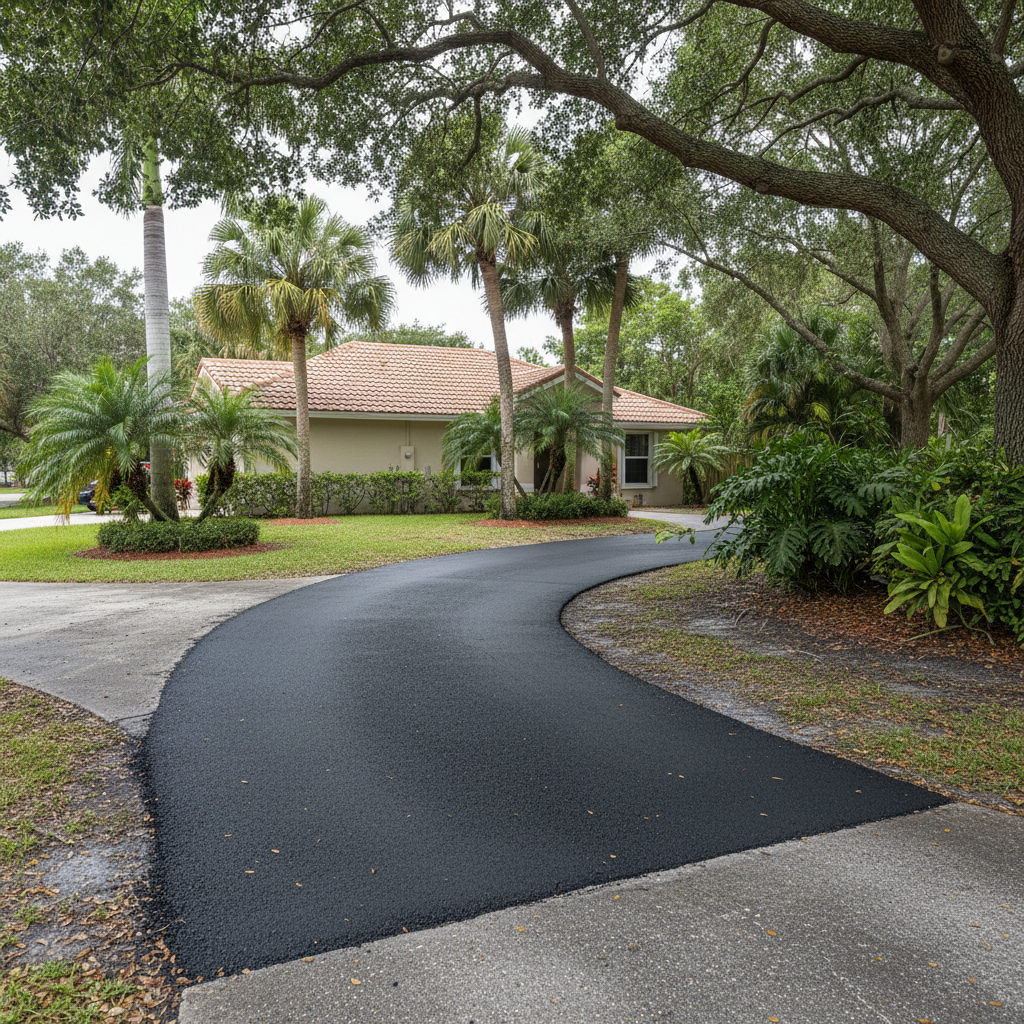
So, when's the best time to finally fix that crack in your driveway or get your parking lot resealed here in Sunrise? You might think it doesn't really matter much in South Florida, but trust me, it absolutely does. Our crazy climate—all that intense sun, heavy rain, and humidity—plays a massive role in how long asphalt repairs actually last.
What Our Local Weather Does to Your Asphalt
You've seen it firsthand, right? One day it's scorching hot and sunny, the next it's a downpour that feels like the sky's just opened up. This constant cycle of heating, cooling, and drenching really beats up asphalt. It expands and shrinks with temperature changes, and water is always trying to sneak into those tiny cracks, especially in older installations, like you see a lot in places like the Lakes of Sunrise. Once water gets in there, it can mess with the base layer, eventually leading to bigger headaches like potholes and that ugly alligator cracking.
So, what's all this mean for when you should schedule repairs? It means you can't just pick any old day. The conditions have to be just right for the materials to cure properly and really stick to the existing asphalt. If you try to sealcoat when it's about to pour, you're pretty much just throwing money away. Same goes for patching when it's too cold (which, let's be honest, isn't a huge problem here) or too hot and humid without doing the right prep work.
When to Book Your Asphalt Work
From what I've seen over my many years in this business, the sweet spot for most asphalt work here in Sunrise usually falls during our drier, cooler months. That's typically late fall through early spring, roughly November to April. Why then?
- Less Rain: We just don't get as many sudden, torrential downpours during these months. This is super important for sealcoating and laying down fresh asphalt. You really need a good 24-48 hours of dry weather after we apply it so it can cure properly.
- Milder Temperatures: Sure, it's still warm, but it's not that brutal, 90-degree-plus heat with 90% humidity we get in the summer. Extreme heat can make asphalt materials cure too fast on the surface, trapping solvents underneath. This often leads to early failure. Milder temperatures let everything cure in a more controlled, thorough way.
- Lower Humidity: High humidity can slow down the curing process for some materials, and it can even mess with how well things stick. Drier air helps everything set up faster and stronger.
Now, does this mean you absolutely can't get repairs done in the summer? Not necessarily. But it definitely calls for more careful planning, watching the forecast like a hawk, and sometimes working around those afternoon rain showers. For bigger projects, if you can swing it, waiting for the dry season is often your best bet.
Weather Conditions That Really Matter
When you give us a call at All Star Asphalt Co, we're not just glancing at the calendar; we're checking the forecast religiously. Here’s what we're really looking for:
- Temperature: Most asphalt products have a recommended temperature range for application. If it's too cold (rare here, but it can happen on a really chilly winter morning), the material won't spread or bond right. If it's too hot, it can flash cure, like I mentioned, and that causes problems.
- Rain: This is the big one, no question. You absolutely cannot apply sealcoat or fresh asphalt on a wet surface or if rain is about to hit. It'll just wash away or won't stick at all. We need clear skies for at least a day or two afterward.
- Humidity: High humidity can make drying times longer. While it's not a deal-breaker for every repair, it's definitely something to think about, especially for sealcoating.
- Wind: Strong winds can make sealcoat dry too quickly on the surface, and they can also blow debris onto a freshly applied area.
Protecting Your Investment All Year Long
Even with perfectly timed repairs, you still need to protect your asphalt throughout the year. It's an ongoing battle against the elements here in South Florida, isn't it? Here are a few things you can do:
- Clean Regularly: Keep your driveway or parking lot clear of dirt, leaves, and other junk. Organic matter can hold moisture against the asphalt, which speeds up deterioration.
- Clean Spills Immediately: Oil, gas, and other chemicals can break down the asphalt binder. Clean them up fast to prevent permanent damage.
- Trim Overhanging Branches: This helps reduce shade, letting the surface dry faster after it rains. Plus, it keeps organic debris from falling onto your pavement.
- Don't Overload: Try to avoid parking really heavy vehicles on residential driveways for long stretches. This can cause rutting and cracking, especially if the base wasn't built for that kind of weight.
- Sealcoat Regularly: This is your best defense against the sun's harsh UV rays and water getting in. A good quality sealcoat, applied every 2-3 years depending on how much traffic it sees, acts like sunscreen and a raincoat for your asphalt. It keeps it flexible and protected.
Look, your asphalt is a big investment. Taking care of it means understanding our local climate and working with it, not against it. If you've got questions about your specific situation or need to schedule some work, just give us a call. We're always happy to talk through the best plan for your property here in Sunrise.